

Process automation, defined plainly: rule-based work moved off a human's plate. Here's how it actually splits into bots, platforms, and AI-assisted workflows.
Codestreaks Team
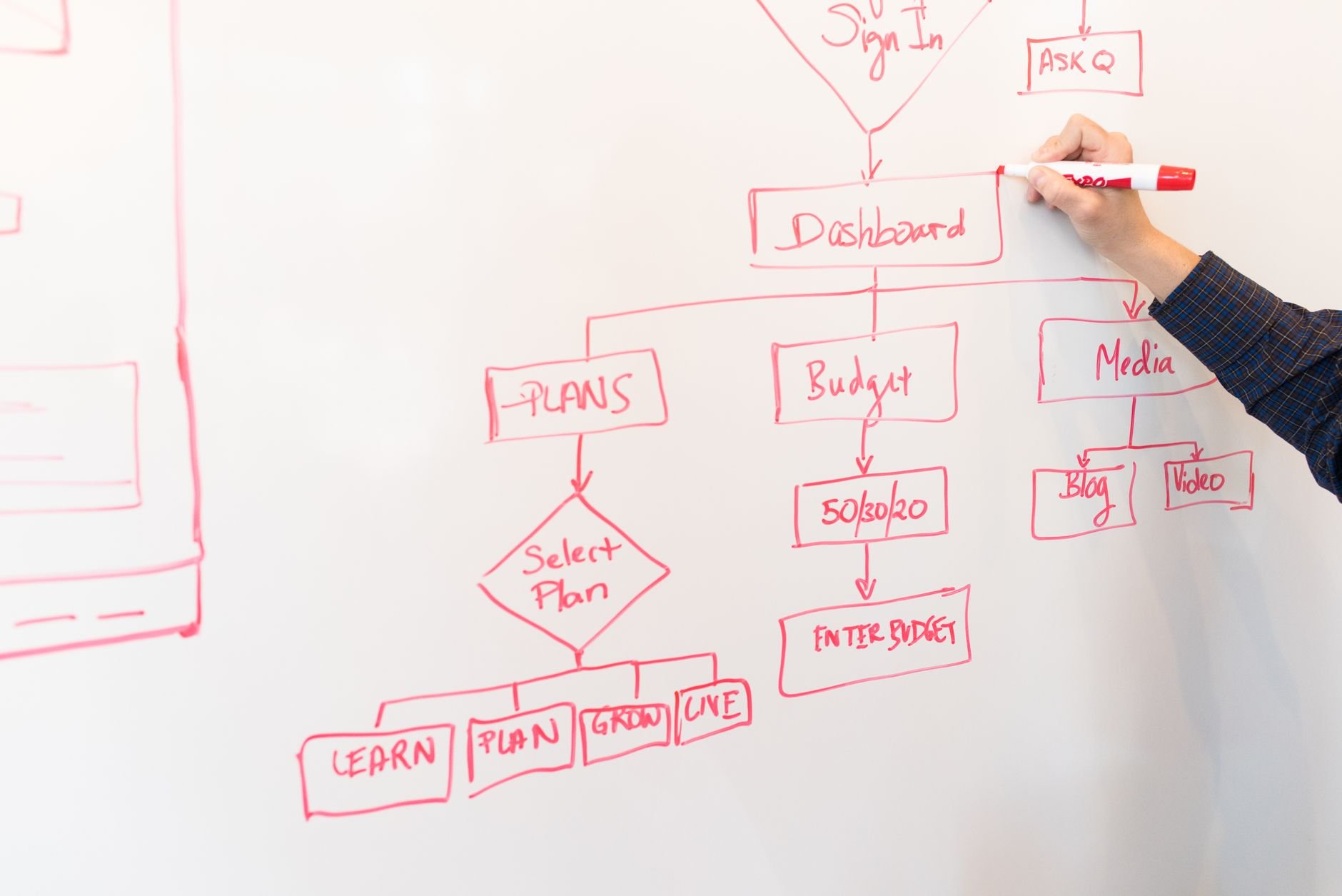
Process automation is software that takes over a repeatable, rule-based piece of work a human used to do by hand: pulling data from one system, checking it against a rule, and pushing it into another system, without someone re-typing it at every step. That's the whole definition. Everything past that sentence is either implementation detail (which tool, which trigger, which system) or scope creep dressed up as strategy.
We say this because most explainers on this topic spend 1,500 words building toward a definition instead of starting with one. We'd rather start with the answer and spend the rest of this post on what actually determines whether a process automation project works or turns into another abandoned Zapier account nobody remembers building.
Almost everything that gets called "process automation" fits into one of three buckets. Confusing them is where most projects go wrong before a line of code gets written.
Rule-based automation. If X happens, do Y. A new invoice arrives, check the amount against a threshold, route for approval or auto-approve. No judgment involved, no ambiguity in the rule. This is the easiest kind to build and the easiest kind to trust, because you can write a test suite that covers every branch.
Automatization examples people usually mean when they say "just automate it": syncing a form submission into a CRM, generating a PDF from a template, moving a file from one folder to another on a schedule, reconciling two spreadsheets. These are single-step or few-step tasks. They're the right first target for automation and the wrong place to stop if the goal is actually meaningful time saved, because a single synced field rarely moves the needle on its own.
Digital process automation, the platform-level version, chains several of these rule-based steps into an end-to-end workflow that spans multiple systems and multiple teams: intake, validation, routing, approval, fulfillment, notification. This is what a "digital process automation platform" actually is: not a single automation, but the orchestration layer that runs a sequence of them reliably, with visibility into where each instance of the process currently sits.
AI-assisted automation, sometimes marketed as "enterprise intelligent automation," adds a layer on top of the rule-based backbone: an LLM or model reads unstructured input (an email, a scanned document, a support ticket) and turns it into structured data the rule-based steps can then act on. This is the piece that's genuinely new in the last two years, and it's also the piece most likely to be oversold. An AI agent that extracts fields from a document reliably 92% of the time is not "automated document processing." It's a very good first draft that still needs a human checking the 8%.
"Automation bot" gets used loosely for anything from a five-minute no-code Zap to a production agent monitoring a queue 24/7. The distinction that actually matters isn't the tooling, it's whether the thing runs unattended against real, messy input and keeps working when the input doesn't match the happy path.
A demo automation bot handles the five examples someone hand-picked to show it off. A production one handles the five thousand real ones, including the malformed date, the duplicate submission, the API that's down for ninety seconds, and the edge case nobody thought to mention during scoping. That gap, between working on curated examples and working on real traffic, is where most of the actual engineering effort goes. It's also the gap that's invisible in a sales demo and very visible three weeks after go-live.
Our own take on this, stated plainly: prototypes lie. A demo that works on five hand-picked examples tells you nothing about the five thousand real ones. Moving a workflow from "works most of the time" to "works reliably enough that nobody checks it manually anymore" is where the actual engineering lives, and it's usually 70% of the total effort on a build, not 20%.
The question we hear most often isn't "should we automate this," it's "should we build this in a no-code tool or as real software." Both are legitimate answers depending on the situation, and the honest version of that advice doesn't flatter either option.
No-code automation stacks (Zapier, Make, n8n) are genuinely great for a first version, a proof of concept, or a workflow that's low-stakes and touches two or three systems. They're fast to stand up and don't require an engineering team.
They stop being great the moment they become load-bearing. A Zap that started as a convenience for one person quietly becomes the thing routing every new customer signup, and then the person who built it leaves the company. Nobody left can read the automation, debug why it silently failed last Tuesday, or safely add a new branch to it without breaking the existing one. We've inherited more than one client project that started exactly this way: a scrappy no-code stack that outgrew its owner's ability to maintain it, at which point it stopped being an automation and started being a liability with a webhook.
The honest line: use no-code tools for anything you'd be fine losing or rebuilding in an afternoon. Once a workflow is something the business actually depends on daily, and especially once it touches money, customer data, or a regulatory requirement, it needs to be built as real, owned, tested software, not a chain of third-party triggers held together by whoever set it up first.
Across the builds we've shipped, one pattern comes up again and again, enough that it's basically the default reason a company calls us in the first place: a capable team is losing hours every week to a manual workflow that isn't actually complicated, it's just tedious. Someone is copying data between two systems that don't talk to each other. Someone is manually checking a status every morning because there's no alert when it changes. Someone is doing at 2am what should have been an automated escalation, because "the tool doesn't talk to the other tool" and nobody's gotten around to fixing that gap.
None of these are hard engineering problems in isolation. What makes them worth a real project instead of a weekend hack is reliability: the automation has to run correctly every single time, not most of the time, because a process that fails silently one week out of twenty is often worse than no automation at all, since nobody's manually checking anymore.
This is also the honest version of what most companies actually need. Most teams don't need "AI transformation." They need three boring, specific workflows automated well, with someone accountable for what happens when the input doesn't match the pattern.
There's no universal number here because the range is wide by design, but concretely: a single-purpose automation or agent, built and shipped as owned software rather than a no-code stack, typically runs $4,000 to $10,000 over three to four weeks. A multi-step workflow that spans several systems and needs real orchestration runs $10,000 to $22,000 over five to seven weeks. A larger platform-level build, the "digital process automation platform" end of the spectrum, runs $22,000 and up, phased over eight to twelve weeks.
If the automation includes an AI component reading unstructured input, budget for ongoing inference cost too. Production agent inference typically runs $50 to $2,000 a month depending on volume and model choice, and good engineering, caching repeated lookups, routing simpler cases to a cheaper model, tightening the prompt, usually cuts that 3x to 10x from a naive first implementation. That gap is real money over a year and it's almost always left on the table in a first build.
Before scoping tooling, timeline, or budget, the actual first question is simpler: is this task rule-based, or does it require judgment? A rule-based process (check a threshold, route based on a category, reconcile two known formats) is a strong automation candidate today, full stop. A process that requires genuine judgment calls, reading intent, weighing ambiguous context, deciding an exception, is a weaker candidate for full automation and a much stronger candidate for AI-assisted automation with a human in the loop: the system drafts or flags, a person decides.
Getting that distinction wrong in either direction is expensive. Over-automating a judgment-heavy process produces a system that's confidently wrong in ways nobody catches until a customer complains. Under-automating a purely rule-based process just leaves hours on the table every week for no good reason.
If your process lives in a regulated industry, the judgment-call line moves even further toward caution, and it's worth reading the deeper version for your specific vertical. We've written dedicated breakdowns on where this plays out in IT operations automation, where the honest advice is to fix three specific workflows well rather than chase a platform migration; in banking automation systems, where the real ROI sits in back-office processes like KYC checks and transaction monitoring rather than the customer-facing chatbot; and in automated insurance solutions, where robotic process automation holds up cleanly on claims intake and rate lookups and falls apart fast anywhere real judgment is required.
Software that takes over a repeatable, rule-based task a person used to do manually, moving or checking data between systems without someone re-entering it at each step. It ranges from a single automated task to a full digital process automation platform orchestrating a multi-step workflow across teams.
An automation bot usually handles one task or a short chain of steps, often built in a no-code tool. A platform orchestrates several of those steps end to end, across systems, with visibility into where each individual case currently sits in the process. The right choice depends on how load-bearing the workflow is, not on which sounds more impressive.
Syncing form submissions into a CRM, generating a document from a template, reconciling two spreadsheets, routing an approval based on a dollar threshold, and flagging a status change instead of having someone check it manually every morning. These are good first automations because they're rule-based with no judgment call involved.
Not exactly. Traditional process automation runs on explicit rules. Intelligent or AI-assisted automation adds a model that reads unstructured input, an email, a document, a ticket, and turns it into structured data the rule-based steps can then act on. It's genuinely useful but needs a human checking the cases the model gets wrong, especially early on.
Ask whether the task is rule-based or requires judgment. If you can write down the exact rule a person follows every time with no exceptions, it's a strong candidate. If the task involves reading intent or weighing ambiguous context, it needs a human in the loop rather than full automation, at least until the judgment calls themselves get narrow and well-defined enough to encode.
If you're trying to figure out whether a specific process at your company is a rule-based automation candidate, an AI-assisted one, or something that shouldn't be automated yet, that's a fifteen-minute conversation, not a sales deck. Book a free 30-minute scoping call and we'll tell you honestly which bucket it falls into, and roughly what it would cost to build right. We reply within two business days.
Start a project or see how we approach these builds at AI agent development.


