

Texts get read. Email doesn't. A practical guide to SMS chatbots: reminder and winback use cases, TCPA consent rules, carrier registration, and what a real build costs.


Look at your phone for a second. The marketing emails from this week sit unopened under a badge you stopped noticing months ago. The app notifications got swiped away at a red light. But the text from your dentist confirming Thursday at 2pm? You read it within a minute of the buzz and replied "C" to confirm.
That gap is the entire argument for an SMS chatbot. Texts land in the same thread as messages from your family, so people read them, and read them fast. Industry surveys have put SMS open rates near 98% for years, while email hovers around 20% on a healthy list. Don't trust the decimals. Trust your own behavior.
We've shipped 30+ projects to production since 2024, including conversational systems across chat, voice, and text, and SMS is still the channel clients underestimate most. This guide covers what an SMS chatbot actually is, where it pays for itself, the consent rules that can bankrupt a careless sender, and what a real build costs.
Most of what gets sold as "SMS marketing" is a megaphone. One-way messages from a short code, a do-not-reply disclaimer customers ignore, and every reply falling into a void. If someone answers your reminder with "can we do Friday instead?" and nothing happens, you don't have a chatbot. You have a broadcast list.
An SMS chatbot is two-way. Under the hood: a messaging provider (Twilio and friends) carries the text, a language model reads the customer's intent, tools hit your calendar, CRM, or order system, and the answer goes back down the same thread. So "can we do Friday instead?" gets a real response: two open Friday slots, a booking, an updated calendar, all inside one text thread. No app install, no login, no hold music.
SMS also has constraints that shape the engineering, and you should know them before scoping anything:
That last constraint is where most demos die.
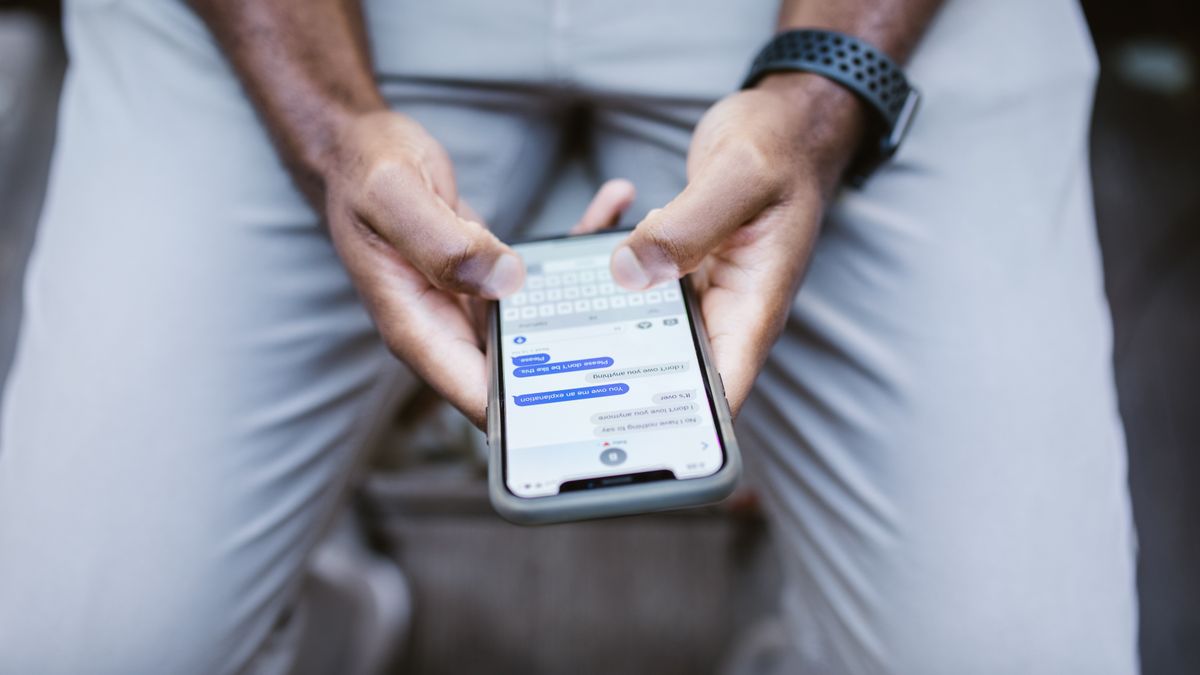
The recurring pattern in our scoping calls: a team arrives with a chatbot demo that impressed everyone in a meeting and fell apart on real data. SMS punishes this harder than any other channel. In the demo, the customer replies instantly, in full sentences, on script. In production, they reply "y" nine hours later, or answer a reminder about Tuesday with a question about their invoice, or text back a photo. Getting from the demo to a bot that survives real threads is reliability engineering: an evaluation suite of recorded conversations, scored transcripts, and regression runs on every prompt change. An agent without one is a liability with a phone number.
The use cases that work share one pattern: a message the customer actually wants, at a moment that matters, with an action attached.
A reminder that only notifies is a voicemail with better open rates. The version that moves numbers is one the customer can talk to. "Reply C to confirm or R to reschedule" becomes a conversation: the bot offers real open slots, books the new time, updates the calendar, and confirms in writing. No-shows drop because rescheduling beats ghosting when rescheduling takes eleven seconds. Clinics, salons, home services, tutoring: anywhere a missed slot is unsold inventory.
The lapsed-customer text works because it reads like a person. "Hi Sam, it's been a while since your last detail. Want a spot next week?" And when Sam answers "how much for a full interior?", the bot quotes the actual price and books it. A winback that can't handle the reply it provokes is worse than none, because it teaches customers your number is a robot not worth answering.
One hard rule, expanded below: winbacks are marketing messages. They require written consent, and "they bought from us once" is not consent.
A lead fills your form and gets a text within a minute: "Thanks for reaching out about the kitchen remodel. Two quick questions so we bring the right estimate." The bot qualifies budget and timeline, books the visit, and hands your human a summary. The mechanism is answering while intent is hot, every time, including Sunday afternoon.
If you run a phone line, SMS is where the awkward parts of a call should go: links, addresses, confirmation codes. "I'll text you the details" is the most natural handoff in customer service, and we covered that pairing in our IVR vs AI phone agents comparison. Every voice agent needs a texting exit.
Texting without consent isn't a growth tactic, it's a legal event. What follows is an informational overview, not legal advice. Put a TCPA attorney on any outbound program before you send.
The TCPA treats text messages as calls, and has for years, as the FCC's guidance on unwanted robocalls and texts makes explicit. The consent framework we laid out for voice in the IVR post applies here unchanged: marketing messages require prior express written consent (a clear, signed agreement, electronic is fine, naming who may text and about what), while informational messages like appointment reminders require prior express consent, generally satisfied when the customer gave you their number for that purpose. Statutory damages run $500 per violating text, up to $1,500 if willful, and class actions multiply per message, not per campaign. A 10,000-text winback blast to a list with fuzzy consent is not a marketing experiment. It's seven-figure exposure.
SMS then adds its own layers on top:
Beyond compliance, there's the trust math. The SMS thread is intimate space, the same inbox as messages from people someone loves. Fake urgency and manufactured scarcity are brand poison anywhere, but in a text thread they get you blocked, reported, and remembered. The only outbound worth sending is the kind the customer would miss if it stopped.
Numbers from our own fixed-price builds. A single-purpose SMS chatbot (reminders plus rescheduling, or lead qualification) runs $4k-$10k and ships in 3-4 weeks, evaluation suite included. A multi-step workflow agent that spans systems (winbacks reading purchase history, reminders driving a live calendar, handoffs into your CRM) runs $10k-$22k over 5-7 weeks.
Running costs have two parts. Model inference typically lands between $50 and $2,000 per month depending on volume, and good engineering (caching, model routing, prompt design) cuts it 3-10x. Carrier fees run about a cent per segment in the US, which sounds trivial until a chatty prompt turns every answer into three segments across fifty thousand messages a month. Tight copy is a line item.
Where does the no-code option fit? Honestly: if all you need is one-way reminders, your scheduling tool's built-in texts are fine, and cheaper. The trap is the day the flow becomes load-bearing, when bookings and revenue run through a zap nobody can debug and the person who built it has left. Custom makes sense when the conversation touches money, live systems, or more than one happy path.
We turn down SMS chatbot projects that look like these:
Yes. Marketing texts (winbacks, promotions) require prior express written consent under the TCPA. Informational texts (reminders, order updates) require prior express consent, usually satisfied when the customer gave you their number for that purpose. Damages run $500-$1,500 per text. This is an overview, not legal advice, so involve a TCPA attorney.
Our single-purpose builds run $4k-$10k fixed price and ship in 3-4 weeks. Multi-step agents across several systems run $10k-$22k in 5-7 weeks. Inference typically adds $50-$2,000 per month, plus roughly a cent per message segment in US carrier fees.
Same brain, different constraints. SMS needs no app or website visit and gets read fastest, but it has no buttons or rich media and sits under TCPA and carrier registration rules. WhatsApp offers rich messaging but requires template approval and matters most outside the US. Most of our builds share one agent core across channels.
The bot must recognize opt-outs in any reasonable phrasing, not just the STOP keyword, log the revocation, send one confirmation, and never message that number again unless consent is re-established. This behavior belongs in the evaluation suite and gets tested on every release.
It has to. Good builds detect low confidence, frustration, or a direct request for a person, then hand off with a summary of the thread so the customer never repeats themselves. Escalation rate is a core metric we track from week one.
If you're weighing an SMS chatbot for reminders, winbacks, or lead follow-up, book a free 30-minute scoping call. We'll look at your actual message volume and consent posture, tell you honestly if a simpler tool covers it, and reply within two business days. We take on two engagements per quarter, every client gets 30 days of post-launch support, and you own 100% of the code.
Book the call or see how we build and evaluate conversational systems on our chatbot development page.
A serial maker of SaaS products and AI agents, I’ve built and launched 10+ tools, grown products to thousands of users, and taken multiple ventures. I share the process what works, what breaks, and how builders can ship faster and smarter. Previously a data scientist at a Big Four consulting firm.


