

Retail AI automation is three problems: shelf vision, inventory reconciliation, and support. What each costs, where demos fail, and which to pilot first.


It's Saturday, your busiest day, and the end-cap carrying this week's promotion has been empty since Thursday night. The POS says you have 14 units. They're in the back room on the wrong shelf, and nobody will notice until a shopper asks, or quietly buys it somewhere else. Multiply that gap by every aisle, every store, and every shift change. That is the actual problem retail AI automation exists to solve, and it has very little to do with the robots in the vendor decks.
Retail automation AI gets pitched as one big platform. In practice it is three separate problems: what is physically on the shelf (vision), what your systems believe is on the shelf (inventory), and what customers are asking about all of it (support). We've shipped 30+ projects to production since 2024, and the pattern behind the ones that paid off fast is consistent: pick one of the three, automate it properly, then move to the next. This guide covers all three, what each honestly costs, and exactly where the demos fall apart.
Your POS knows what sold. Your ERP knows what was ordered. Your warehouse system knows what shipped. Nothing in that stack knows what a shopper actually sees when they stand in front of a fixture.
That blind spot has a name in the industry: phantom inventory. Stock the system counts as available that is misplaced, in the back room, damaged, or stolen. The symptom is an on-shelf gap that no reorder will fix, because the system thinks the shelf is fine.
The traditional patch is the store walk. Someone with a handheld walks the aisles once or twice a shift, scanning gaps and fixing tags. It works, but it's sampling. A store with 20,000 SKUs audited twice a day is unobserved for most of its selling hours, and the audit itself eats labor you'd rather spend serving customers. Retail AI vision automation is, at its core, replacing that sampling with continuous observation.
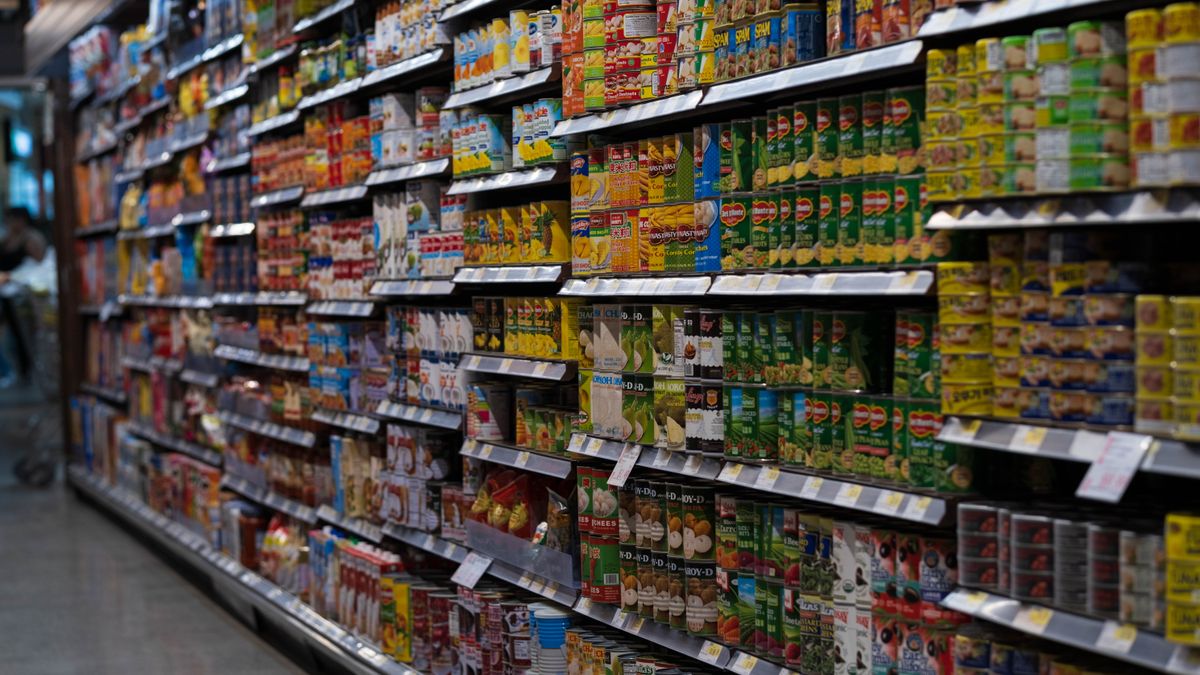
Strip the buzzwords and the mechanism is simple. A detection model looks at images of your fixtures, either from fixed cameras or from scheduled photos taken by staff or shelf-scanning hardware, and answers specific questions: is there a gap here, does this facing match the planogram, does the price tag match the promo in the system. The underlying detection models have improved sharply year over year, a trend the Stanford AI Index tracks in detail, which is why this is now practical for mid-size retailers rather than national chains only.
The use cases that actually earn their keep:
Now the honest part, which vendor decks skip. Store environments are hostile to computer vision. Glare off freezer doors and glossy packaging. Shoppers and carts blocking the frame. Packaging that redesigns itself every season, which means a model trained in March meets shelves it has never seen in October. Lighting that varies by store, by aisle, and by hour. None of this is a reason not to build. All of it is the reason the engineering matters more than the model name.
A pattern we keep meeting, in retail more than almost anywhere: a team arrives with a vision demo that impressed everyone in a meeting. Five clean photos, taken straight-on in good light, every product detected with a tidy bounding box. Then it met a real store. Glare turned the freezer aisle into a mirror, a cart parked in front of the fixture for twenty minutes read as a stockout, and a supplier's holiday packaging refresh made a top seller invisible to the model.
Nothing was wrong with the demo. Demos are built on the five examples that work. The store runs on the five thousand that don't. Most of our work is exactly this gap: reliability engineering, retraining pipelines for packaging changes, occlusion handling, and confidence thresholds tuned so associates trust the alerts instead of muting them. Prototypes lie. Moving from 90% to 99% reliability is where the engineering lives, and in retail, 90% accurate shelf alerts get ignored by week two.
A vision system that produces a dashboard has produced a chore. Someone now has to read the dashboard. The value shows up when detections flow directly into the workflow your team already runs.
Concretely, that means an agent sitting between the camera output and your systems. It cross-checks a detected gap against POS stock. If the system shows zero, it confirms the reorder is already in flight and stays quiet. If the system shows stock, it creates a restock task with a location, and if the units aren't found, it queues an inventory adjustment for a human to approve. Adjustments touch your books, so they keep a human checkpoint. Routine restock tasks don't need one.
This is the unglamorous middle layer most projects skip, and it's why so many shelf-scanning pilots stall as reports nobody reads. The camera is maybe a third of the build. The rest is integration with your POS or ERP, task routing, and an evaluation suite that measures the whole loop against reality, not just the model against a test set.
The third problem is the inbox and the chat widget. A retail chatbot earns its place when it's grounded on your live systems and restricted to questions with factual answers: where is my order, is this item in stock at the store near me, what's your return window, what are today's hours. Wire it to real inventory and order data and it resolves the bulk of routine contacts instantly, at 2am, in the middle of a sale weekend.
Three rules make the difference between an asset and a liability:
And a place chatbots don't belong: high-consideration selling. A bot that intercepts a shopper comparing two $800 appliances and offers canned enthusiasm hurts conversion more than no bot at all. Let it handle status and logistics, and get out of the way of the sale.
Numbers, because most vendors make you sit through three discovery calls to get them.
A single-purpose build runs $4,000 to $10,000 fixed price and ships in 3 to 4 weeks. That covers a grounded retail chatbot on your order and inventory systems, or a shelf-gap detection pilot on one store's priority fixtures.
A multi-step workflow, vision plus the reconciliation agent plus task routing into your existing systems, runs $10,000 to $22,000 over 5 to 7 weeks. A phased multi-store platform lands at $22,000 to $30,000+ across 8 to 12 weeks.
Running costs are more manageable than the streaming-video mental model suggests. Production inference typically lands between $50 and $2,000 a month, and good engineering cuts that 3 to 10x. For vision, the biggest cost decision is frame cadence: analyzing a snapshot of each fixture every 15 minutes costs a small fraction of continuous streaming and catches almost every gap that matters.
Whoever you hire, hold firm on two things: you get the repo, and you get support after launch. We hand over 100% code ownership and 30 days of post-launch support on every engagement, and we take on two engagements per quarter so each one actually ships. If a vendor's answer to "do we own the code" involves a subscription, walk away.
Most retailers don't need an AI transformation. They need the gap between shelf and system closed for their highest-margin categories, and their routine customer contacts answered without a queue. Pick the problem that's costing the most this quarter, pilot it in one store against a few weeks of manual audits as the baseline, and expand only when the numbers hold.
Computer vision applied to store operations: models that read camera images of shelves and fixtures to detect out-of-stocks, planogram violations, and price-tag mismatches, then push those detections into restock tasks and inventory corrections. The camera is the sensor; the workflow integration is where the value is.
Sometimes, and it's worth testing before buying hardware. Ceiling-mounted security cameras are angled for people, not facings, so coverage and resolution vary by fixture. A common pattern is a hybrid: existing cameras where the angle works, fixed shelf cameras or scheduled handheld photos where it doesn't. A pilot tells you in weeks which fixtures need what.
Both, depending on scope. Grounded on live order and inventory data and limited to status, stock, and policy questions, a chatbot removes friction and frees staff for selling. Pushed into persuasion or left to guess at answers, it damages trust at the exact moment a customer is deciding. Scope it to facts, escalate everything emotional.
A focused single-purpose build (one chatbot or one vision pilot) runs $4,000 to $10,000 and ships in 3 to 4 weeks. Vision plus inventory workflow integration runs $10,000 to $22,000. Ongoing inference typically costs $50 to $2,000 a month, driven mostly by how often you analyze each camera frame.
Whichever of the three problems is measurably costing the most: shelf gaps in high-margin categories usually beat everything else, followed by routine support contacts. Resist starting with the biggest platform. Start with the workflow you can baseline, measure, and trust.
If shelf gaps, phantom stock, or a flooded inbox are on your list this quarter, book a free 30-minute scoping call. We'll tell you which problem to pilot first, what a one-store build costs, and whether your existing cameras are good enough to start. We respond within two business days, and if the honest answer is "run manual audits for another quarter", that's what we'll say.
Book a scoping call or see how we build vision systems on our computer vision development page.
A serial maker of SaaS products and AI agents, I’ve built and launched 10+ tools, grown products to thousands of users, and taken multiple ventures. I share the process what works, what breaks, and how builders can ship faster and smarter. Previously a data scientist at a Big Four consulting firm.


