

A real scoping engagement covers platform choice, feasibility, and cost estimates before code exists. When that's worth paying for separately, and when it's not.
Codestreaks Team
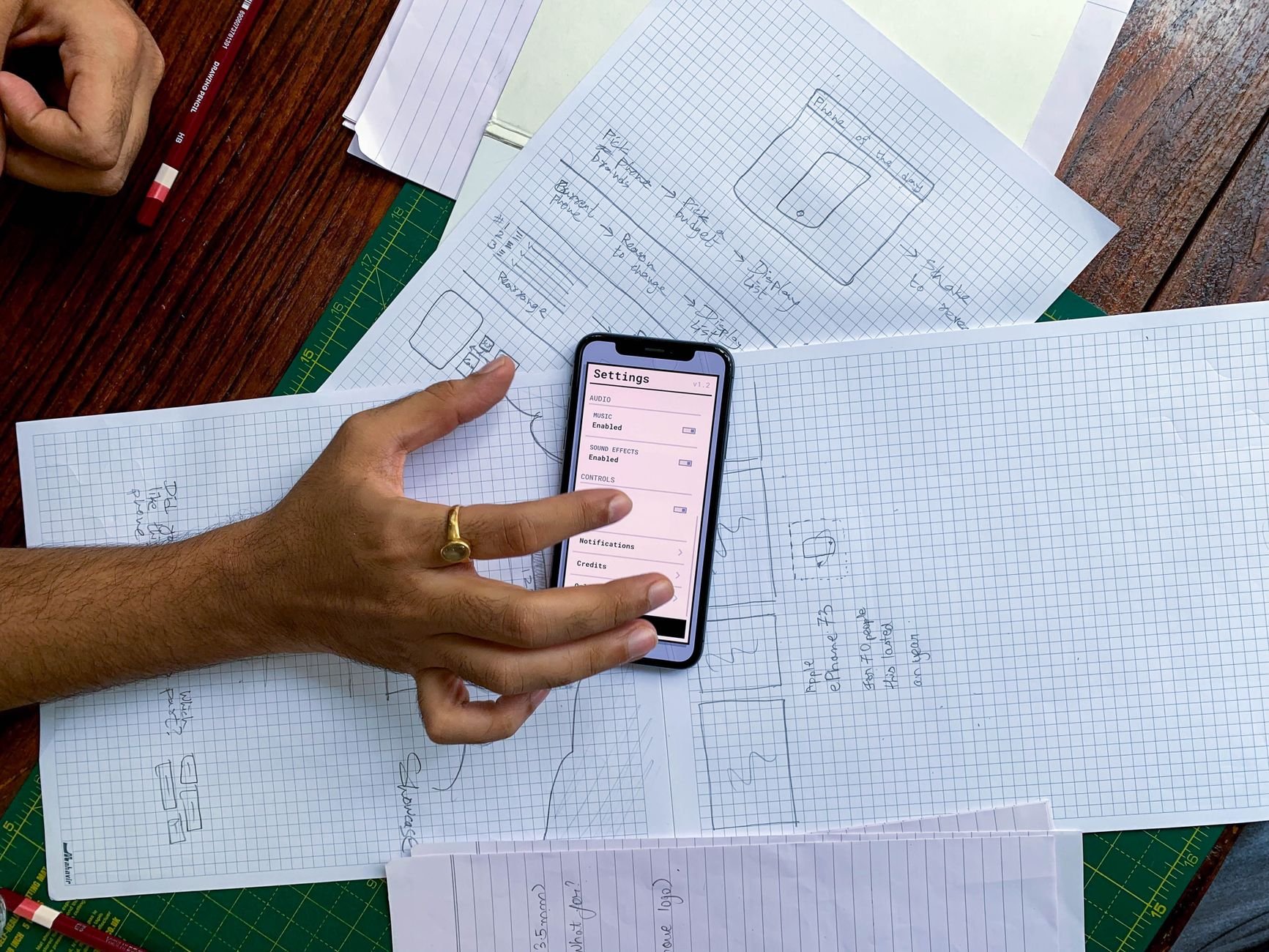
You've got a product idea, maybe a rough Figma file, maybe just a whiteboard photo from a founder dinner. Someone on the team says "let's just start building." Someone else says "we should get consulting first." Neither of them can describe what a mobile app development consulting engagement actually produces, so the decision comes down to whichever voice is louder that week.
That's the wrong way to decide it. A real consulting phase, done right, produces specific artifacts: a scoped feature list ranked by what's load-bearing versus nice-to-have, a platform recommendation with the reasoning attached, a technical feasibility read on the riskiest parts of the idea, and a cost and timeline range you can actually plan a budget around. If a consulting engagement doesn't hand you those four things, you paid for a deck, not a plan.
Founders almost always underestimate scope on the first pass, and it's rarely their fault. An idea sounds like one feature ("users upload a photo and get a match") until someone maps out what that actually requires: auth, image storage and compression, a matching algorithm, push notifications, an admin panel to moderate the matches, and a data model that survives a schema change six months in. None of that is visible from the pitch.
A scoping session's job is to surface that list before it becomes a mid-sprint surprise. Good scoping doesn't just list features, it ranks them. What has to exist for the app to be usable at all. What can wait for version two without anyone noticing. What sounds essential but is really a founder's pet feature that will cost three weeks and move zero user metrics. Naming that third category out loud, to the founder's face, is most of the value in the room.
Native iOS and Android, or a cross-platform framework like Flutter or React Native: this gets treated as a technical preference, and it isn't one. It's downstream of who your users are, what the app needs to do with the device, and how fast you need to move.
A few things that actually decide it, not vibes:
Get this wrong and you don't find out for months, usually right when you're trying to ship a feature that the framework you picked makes disproportionately painful.
Feasibility work means pressure-testing the riskiest technical assumption in the idea before anyone commits real budget to it. Can this API actually deliver what the pitch assumes. Does the real-time sync requirement hold up with the data volumes this business expects at scale, not at demo scale. Is there a device or OS constraint nobody on the founding team knew existed.
This is the part of consulting that's genuinely worth paying for on its own, separate from anything else, because catching a feasibility problem before a build starts costs a few days of a senior engineer's time. Catching it three sprints in costs a rebuild, a missed launch date, and a very uncomfortable conversation with whoever funded the project.
"$40,000, twelve weeks" is not an estimate, it's a number someone made up to end the meeting. A useful estimate is broken into phases, tied to specific scope, and honest about what's a fixed price and what's a range because the requirement itself is still fuzzy.
We work in three rough tiers depending on complexity: a single-purpose build runs $4,000 to $10,000 over three to four weeks, a multi-step app with real workflow logic runs $10,000 to $22,000 over five to seven weeks, and a full platform build runs $22,000 and up, phased over eight to twelve weeks. Those numbers only mean anything once scope is fixed, which is exactly why the scoping conversation has to happen before the estimate, not the other way around.
Pay for a separate consulting engagement when the risk is concentrated in the unknowns, not the build. That's true when: the idea depends on a technical assumption nobody's validated (a real-time feature, a hardware integration, an AI component with unclear accuracy requirements), when multiple stakeholders disagree on scope and someone credible and unbiased needs to referee it, when you're raising money and need a defensible estimate to put in front of investors, or when the platform decision has long-term cost implications you can't easily reverse.
In those cases, a few thousand dollars and one to two weeks of dedicated scoping is cheap insurance against a much more expensive mistake made at build speed.
Here's the honest part most agencies won't put in writing: if the idea is a known shape (a marketplace app, a booking app, a content app with standard auth and payments) and you're hiring a dev partner who scopes properly as part of the build engagement anyway, a separate paid consulting phase is often just paying twice for the same conversation.
Any competent build partner should be doing feasibility checks, platform recommendations, and a ranked feature breakdown in week one of the engagement, before a serious line of code gets written, without billing it as a distinct phase. If a firm insists you need a standalone consulting contract before they'll even discuss a build, ask what specifically that phase produces that a proper kickoff wouldn't. Sometimes the honest answer is nothing, it's just a way to bill twice for the same work.
The tell is whether the "consulting" firm and the "build" firm are the same people. If they are, and they scope well, you probably don't need a separate contract for it. If a consulting-only shop is handing you a document that a different team then has to interpret and rebuild from scratch, you've added a translation layer that introduces its own risk. Something always gets lost between the recommendation and the person who has to actually implement it.
The pattern we see most often isn't a bad idea, it's a demo that impressed everyone in a meeting and fell apart on real data. A founder shows five hand-picked examples where the concept works beautifully, the room nods, and everyone assumes the remaining thousand edge cases will sort themselves out during the build. They don't. Most of the actual engineering work on a mobile product isn't the first version, it's the unglamorous climb from something that works 90% of the time to something that holds up at 99%, on real devices, with real user data, at real scale. A scoping conversation that surfaces this early, before the team is emotionally invested in the demo, saves more time than any single feature decision made afterward.
It depends heavily on whether it's a standalone phase or folded into a build engagement. As a rough build-phase reference, single-purpose apps run $4,000 to $10,000, multi-step apps with real workflow logic run $10,000 to $22,000, and full platform builds run $22,000 and up. A dedicated consulting-only engagement is typically a small fraction of that, scoped separately.
Only if the idea carries real unvalidated technical risk, stakeholders disagree on scope, or you need a defensible estimate for investors. If you're hiring a partner who scopes properly in week one as part of the build, a separate paid phase is often redundant.
It means pressure-testing the riskiest assumption in the idea, an API's real capabilities, real-time sync at real data volumes, a hardware or OS constraint, before committing build budget to it. It's a few days of senior engineering time spent to avoid a rebuild months in.
By where your users are, how close to hardware the app needs to sit (camera, background location, AR push toward native), and how long you'll be maintaining it, not by which framework is trending. It should come out of the scoping conversation, not a preference stated before scope exists.
For most consumer or small business apps, one to two weeks of focused work is enough to produce a ranked feature list, a platform recommendation, and a cost range. Longer usually means the idea itself is still changing shape underneath the process.
If you're trying to figure out whether your idea needs a dedicated consulting phase or just a dev partner who scopes properly on day one, that's exactly the kind of question worth a real conversation instead of a guess. Free 30-minute scoping call, two business day response either way. See how we approach mobile app development or start a project.


