

Grocery apps aren't just checkout apps with a product catalog. Here's what actually makes them hard, and when a white-label platform stops being enough.
Codestreaks Team
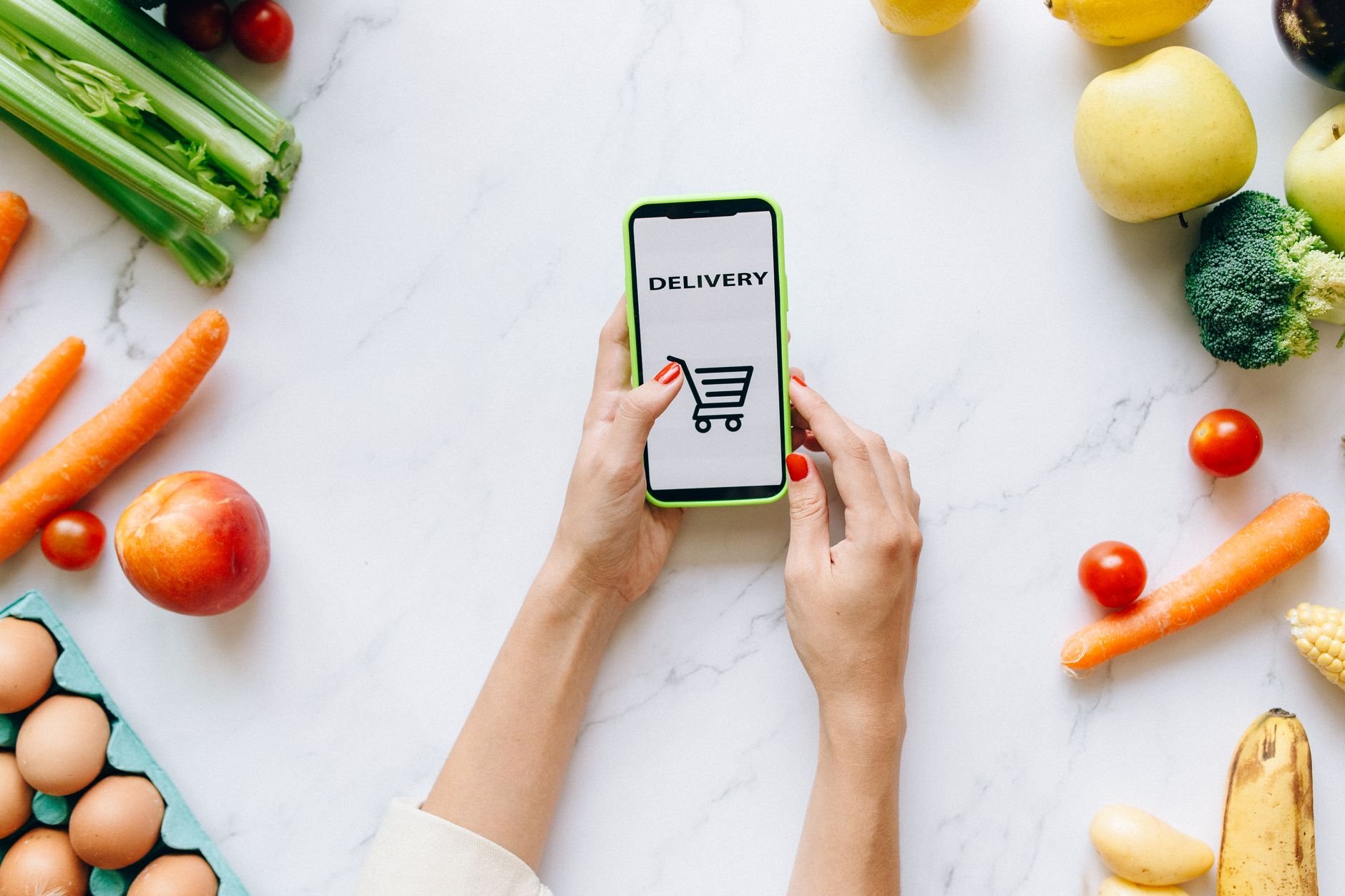
Most people evaluating grocery mobile app development start from the wrong reference point. They've built or bought a normal e-commerce app before: browse, cart, checkout, done. Grocery looks like that from the outside. It isn't that from the inside, and the gap between the two is exactly where budgets blow up six months after launch.
A t-shirt is either in stock or it isn't, and it stays that way for hours. A bag of avocados might be in stock when the order is placed and gone by the time the picker reaches the shelf. That single difference changes how you architect inventory, how you write substitution logic, how you schedule delivery, and even how you structure the payment flow at checkout. None of it is exotic engineering. All of it is easy to get wrong if you start from a generic app template and bolt grocery features on afterward.
In a normal retail app, inventory updates once a warehouse system says so, maybe every few minutes, maybe nightly. Grocery inventory changes constantly and unpredictably, because it's being consumed by in-store shoppers at the same time your app is trying to sell it. If your inventory sync runs on a batch job instead of an event stream, you will oversell items every single day, and the customer finds out at the worst possible moment: after they've paid.
The technical answer isn't complicated in theory. You need inventory events pushed from the point-of-sale or warehouse management system as they happen, a buffer layer that reconciles conflicting updates (a POS scan and an app order hitting the same SKU within seconds of each other), and a UI that reflects "probably in stock" rather than pretending certainty it doesn't have. What's hard is doing that reconciliation correctly under load, at store scale, without introducing lag that makes the sync pointless. This is the piece most white-label grocery platforms handle worst, because it's the piece that's specific to your store's actual systems, not a generic feature they can build once and resell.
Every grocery app eventually has to answer: what happens when the picker reaches the shelf and the item is gone? This sounds like a small feature. It is, in practice, one of the harder pieces of the entire build, because it sits at the intersection of inventory data, customer preference, margin, and trust.
Good substitution logic has to know more than "is there a similar product." It needs to know whether the customer allows substitutions at all for a given item (some people will never accept a substitute for their baby's formula), what an acceptable substitute actually is (same brand different size beats different brand same size for most shoppers, but not all), how the price difference gets handled, and how the picker communicates the swap before the customer is charged for something they didn't order. Get this wrong and you don't just lose one order. You lose the customer's trust in the whole app, because a bad substitution feels like being cheated, not like a technical hiccup.
This is also where a lot of "it worked in the demo" software falls apart. A substitution flow that looks fine against ten test SKUs breaks down against forty thousand real ones with inconsistent categorization, missing size data, and edge cases nobody thought to test for.
Teams that haven't built one tend to treat delivery-slot scheduling as a UI problem: show some available times, let the customer pick one. The actual constraint is capacity, not calendar rendering. Every slot has a hard ceiling set by driver availability, vehicle capacity, and how long a given order realistically takes to pick and pack, and that ceiling changes hour to hour and store to store.
Overbook a slot and either an order goes out late or a driver's whole afternoon cascades into delay for every order after it. Underbook out of caution and you're turning away revenue you had the capacity to fulfill. The scheduling system has to model real operational limits, not just block off calendar squares, and it has to update in near real time as pickers accept or decline orders and as delivery windows fill up. Peak windows (weekend mornings, the hour after people get off work) need dynamic slot pricing or capacity throttling too, or you end up with a UI that shows an open 6pm slot that operationally can't actually be met.
A standard e-commerce checkout charges a known amount for a known set of items. Grocery checkout has to charge for an order that might change between placement and delivery, because of substitutions, out-of-stock items, or weight-based pricing on produce and meat that isn't final until it's weighed. That means your payment flow needs to support an authorization hold at order time and a final capture that can differ from the original amount, with a clear, honest accounting of the difference shown to the customer, not a surprise charge that shows up after the fact.
Tipping adds its own layer. Pre-tip, post-tip, adjustable-after-delivery tipping, and how the tip routes to the actual driver rather than getting absorbed into a general payments pool, all need to be decided deliberately, because drivers notice when tipping logic is sloppy and it shows up in fulfillment quality. None of this is exotic payments engineering. It's just more state than a typical checkout carries, and skipping any of these cases is how you end up with support tickets instead of a working checkout.
White-label grocery and delivery platforms exist for a reason, and for a lot of businesses they're the correct answer, not a compromise. If you're running a single store, your catalog and operations look like everyone else's, and you don't need anything your competitors don't already have, paying a monthly fee for someone else's already-built inventory sync and delivery logic is cheaper and faster than building your own. Most single-location grocery and convenience operators fit here, and we'd tell you that directly if you asked us to scope custom software for that situation.
Custom software earns its cost when your operation has a real constraint a generic platform can't model: multi-store inventory that needs to route substitutions differently by location, a delivery fleet with unusual capacity rules, a loyalty or pricing structure tied to your specific margins, or integrations with a POS or warehouse system the platform simply doesn't support. It also matters when you want to own what you're building rather than rent it indefinitely. If an agency or platform vendor won't hand you the repo and full access to what you're paying for, that's worth noticing before you sign, not after. Code ownership isn't a nice-to-have add-on, it's the actual deal, and any vendor unwilling to give it to you is telling you something about the relationship you're entering.
A pattern we see constantly, not just in grocery: a team shows us a demo that impressed everyone in the room, and it falls apart the moment it meets real data. It's rarely because the core idea was wrong. It's because the demo was tested against ten clean examples and the real world runs on forty thousand messy ones, half-mapped SKUs, inconsistent unit sizes, edge cases nobody thought to check. In grocery specifically, that gap shows up hardest in substitution logic and inventory sync, because those are the two systems that have to hold up against live, constantly-changing store data instead of a curated test set. Most of the actual engineering work on a project like this isn't the first working version. It's the stretch between 90% reliable and 99% reliable, and that stretch is where most of the budget and most of the value actually live.
If you run one store with a fairly standard catalog and no unusual operational constraints, a white-label platform is usually the right call and the cheaper one. Custom software earns its cost when you have multi-store logic, unusual delivery constraints, or integrations a generic platform doesn't support.
Inventory events get pushed from the point-of-sale or warehouse system as they happen, rather than updated on a batch schedule, with a reconciliation layer to handle conflicting updates when in-store and app sales hit the same item at nearly the same time.
Not the matching algorithm. It's handling customer preferences correctly (some items should never be substituted), pricing the swap fairly, and communicating the change before the customer is charged, so a substitution reads as helpful rather than as being shorted.
It depends heavily on scope, but a focused build with real inventory and delivery logic typically runs in the range of several weeks to a few months from kickoff to live deployment, not a multi-year program, if the scope is defined honestly upfront.
Yes, and it's common. The inventory data, order history, and customer accounts can usually be migrated. The harder part is usually operational: your team has to be ready to own something instead of renting it, including who handles support and maintenance going forward.
If you're trying to figure out whether your grocery or delivery business actually needs custom software, or whether a white-label platform will hold up for another year or two, that's a conversation worth having before either investment happens. Free 30-minute scoping call, two business day response either way. See how we approach mobile app development or start a project.


